

In the previous insight, we explored what Internal Carbon Pricing is, the three models companies use, and where ICP can be applied across business functions. The next question is practical: how do you actually make it work?
Choosing the wrong model or launching before the organisation is ready can turn ICP away from a decision-making tool. The key is matching the model to your company's current priorities and introducing it in a way that builds credibility, not resistance.
Choosing the Right Internal Carbon Pricing Approach
No single ICP model fits all companies. The right choice depends on what you want ICP to achieve right now.
.png)
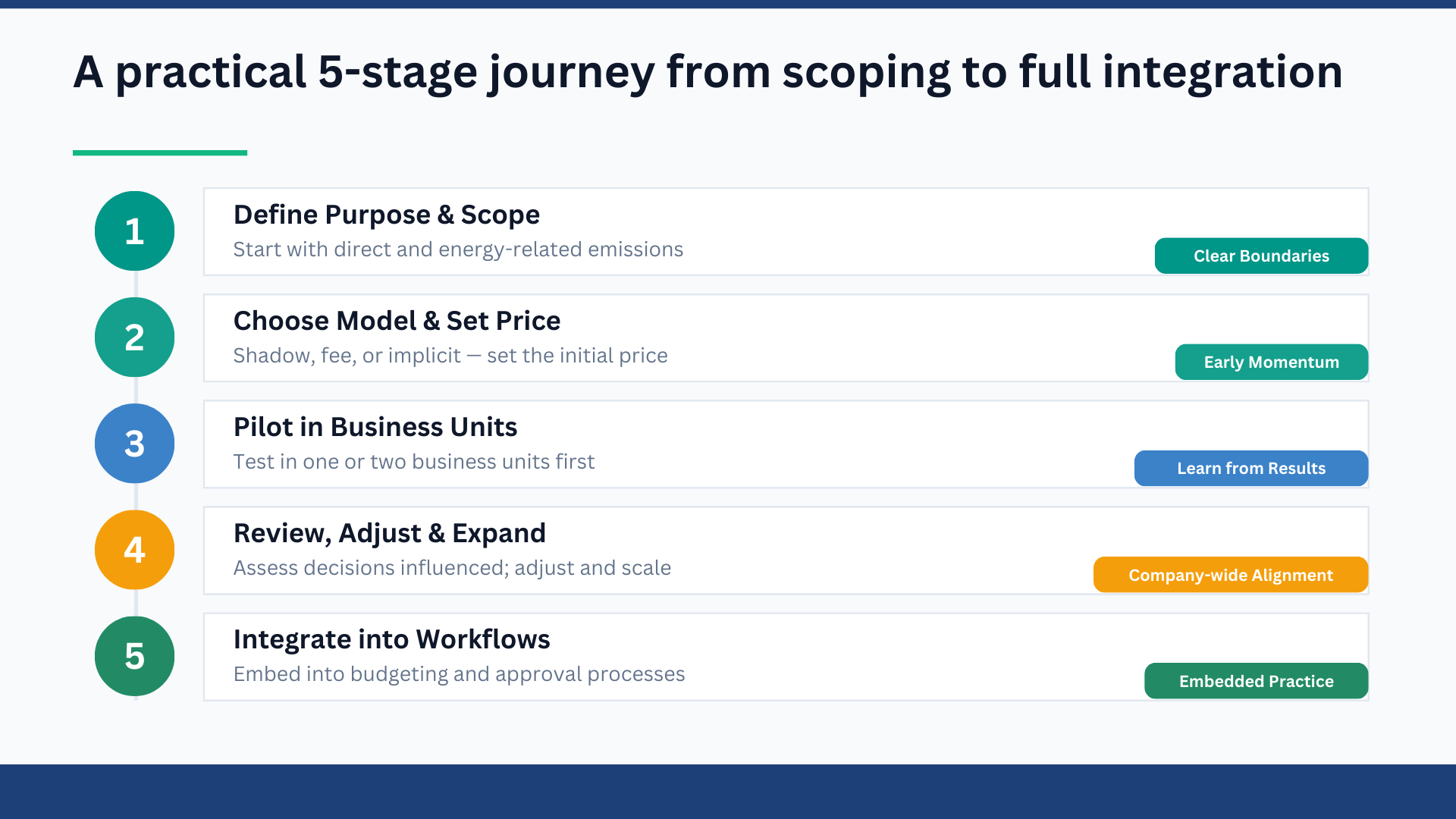
In practice, most companies evolve through these models rather than choosing one permanently. A typical path: start with a shadow price to build familiarity, use implicit pricing to calibrate it, then introduce an internal fee once emissions tracking is reliable and teams are ready for accountability.
Implementing ICP: A Practical Roadmap
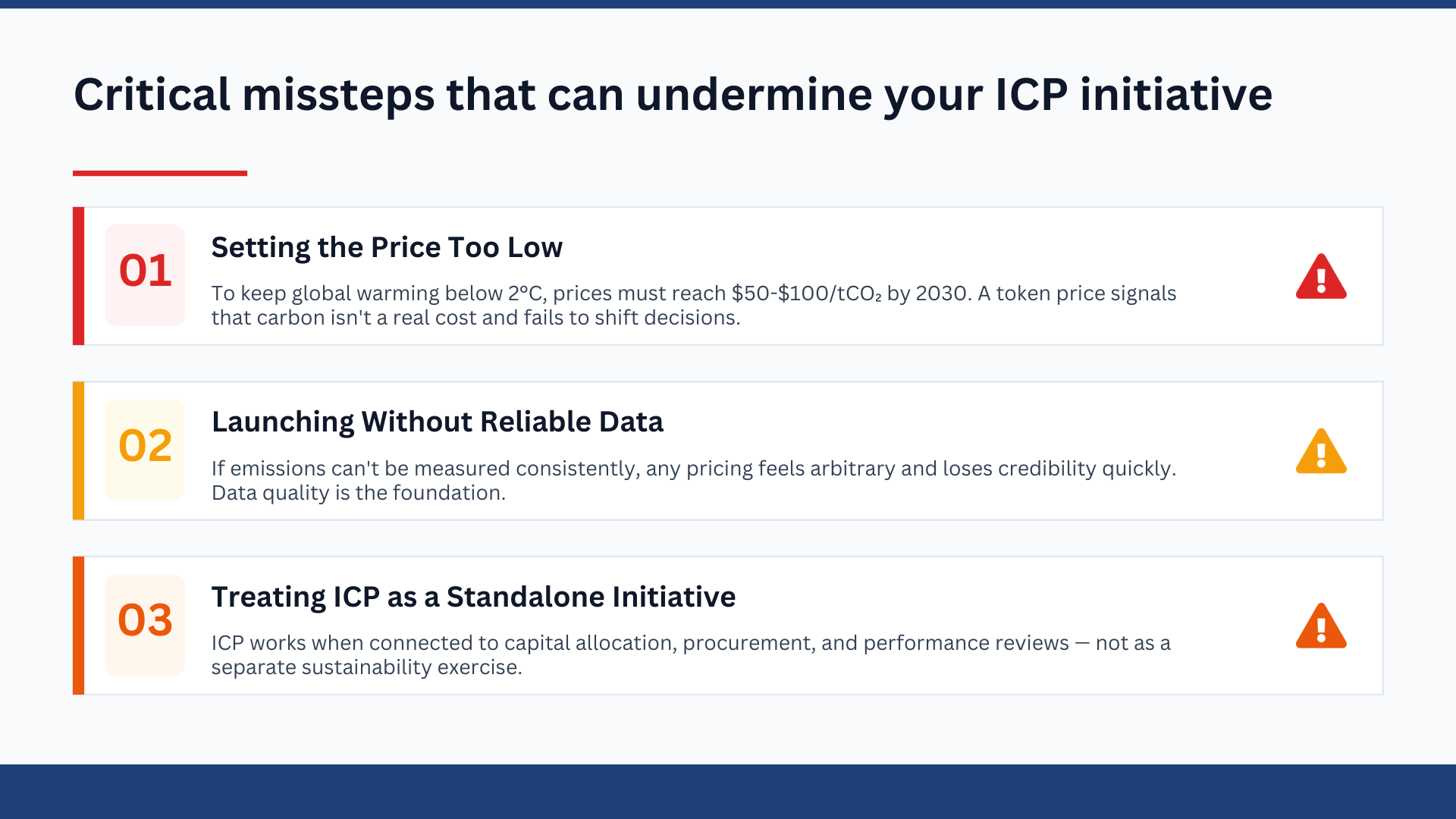
Common Pitfalls to Avoid
Why Leading Companies Use Internal Carbon Pricing
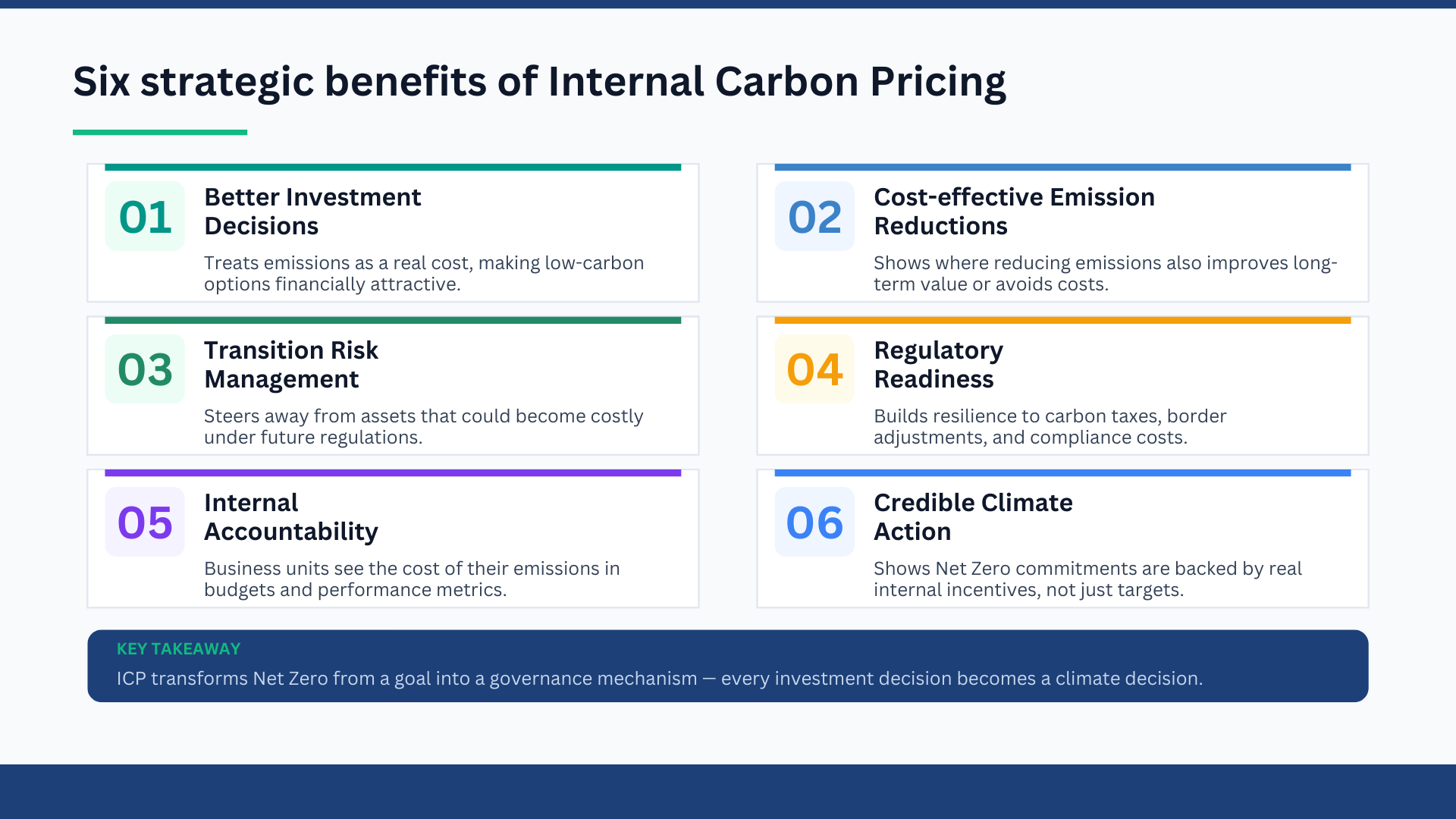
ICP transforms Net Zero from a goal into a governance mechanism. When carbon has a price, every investment decision becomes a climate decision, and emission reduction becomes a natural outcome of sound financial management.