
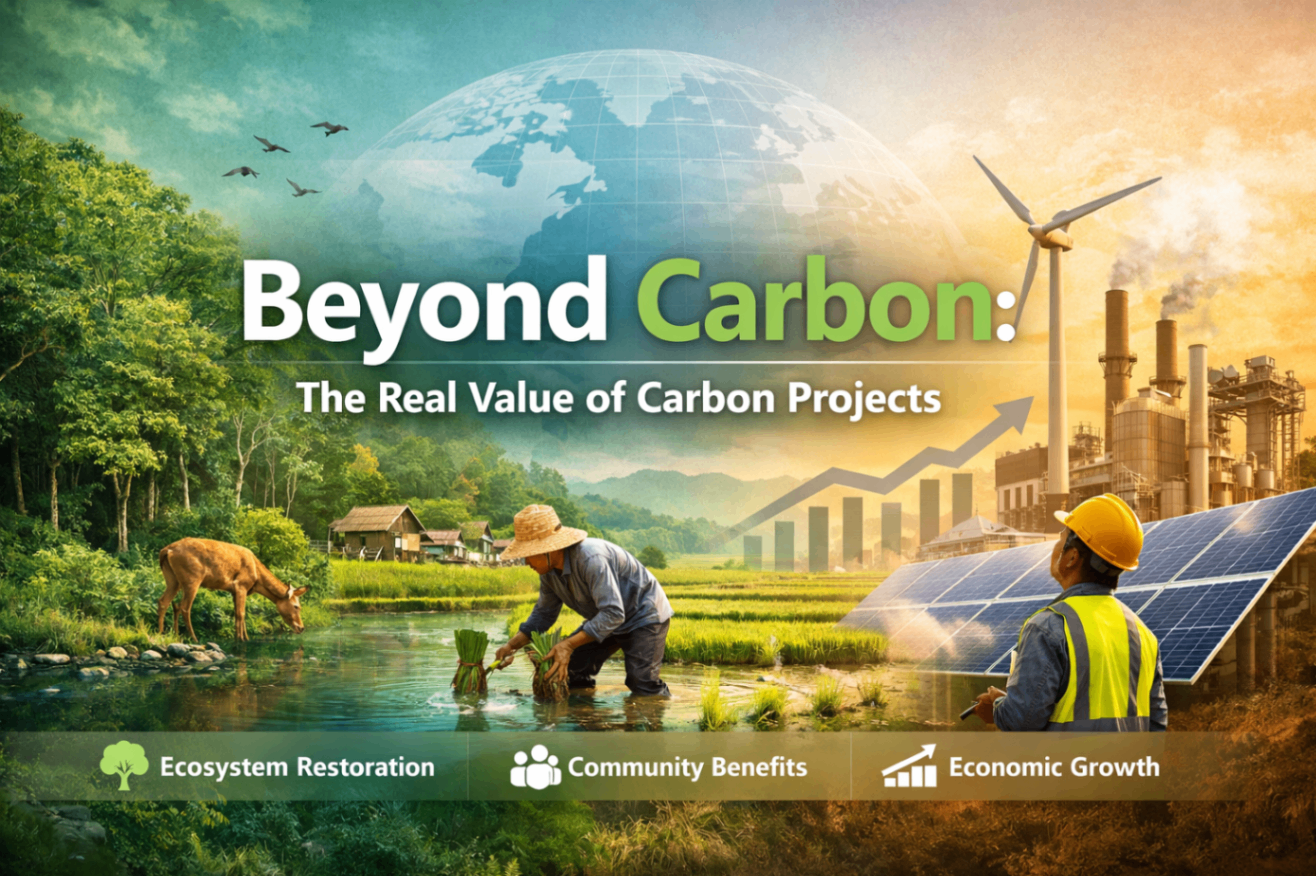
Carbon projects are often viewed through a narrow lens: tonnes of CO₂ reduced or removed, credits issued, and targets met. While emissions’ impact remains central, this framing overlooks a critical truth. When designed well, carbon projects can act as powerful engines of sustainable development, delivering environmental protection, social progress, and economic value alongside climate outcomes.
For corporates navigating net-zero commitments, regulatory pressure, and rising stakeholder expectations, this broader perspective is no longer optional; it is strategic.
Carbon Projects as Drivers of Sustainable Development
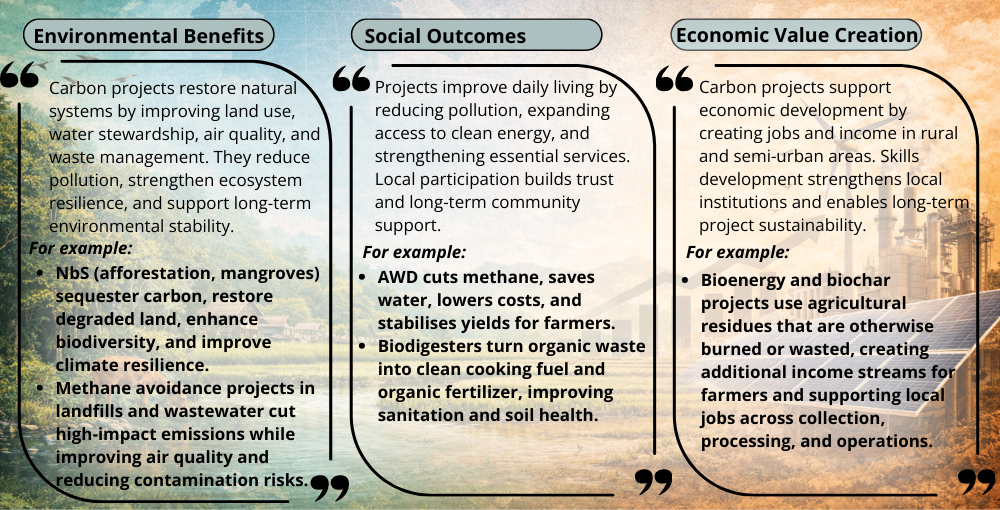
High-integrity carbon projects frequently operate in regions facing development challenges. Their value lies not only in the volume of credits generated, but in the quality, durability, and inclusiveness of the real-world outcomes they create. When projects are designed with local contexts in mind, their impact extends well beyond just climate mitigation.
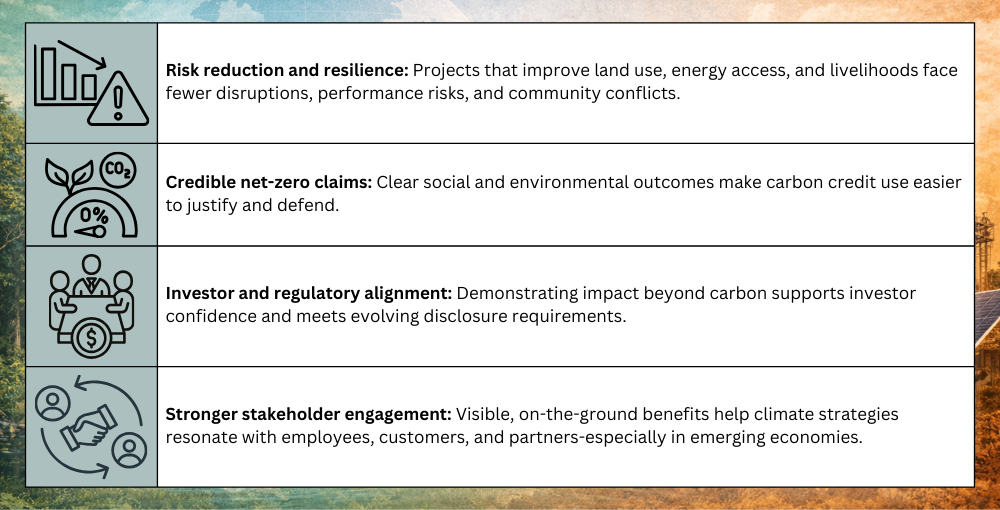
Why this matters for Corporates?
For corporates, the relevance of “beyond carbon” thinking goes far deeper than reputational benefit. This broader impact translates into tangible strategic advantages.
Ultimately, the real value of carbon projects lies not only in the emissions they address, but in the systems they strengthen. For corporates, integrating high-quality carbon projects into sustainability strategies supports stronger ESG performance by linking climate action with social impact, risk management, and long-term value creation, ensuring net-zero efforts are credible, resilient, and grounded in real-world outcomes.